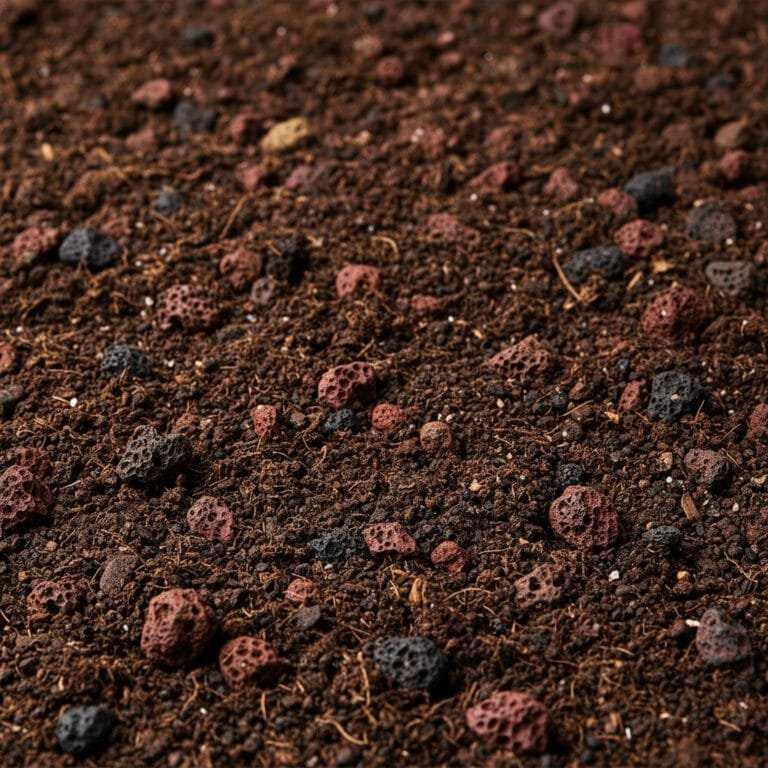
AS4419 Soil is a premium, engineered landscape soil formulated to comply with Australian Standard AS 4419 for soils used in landscaping and garden applications.
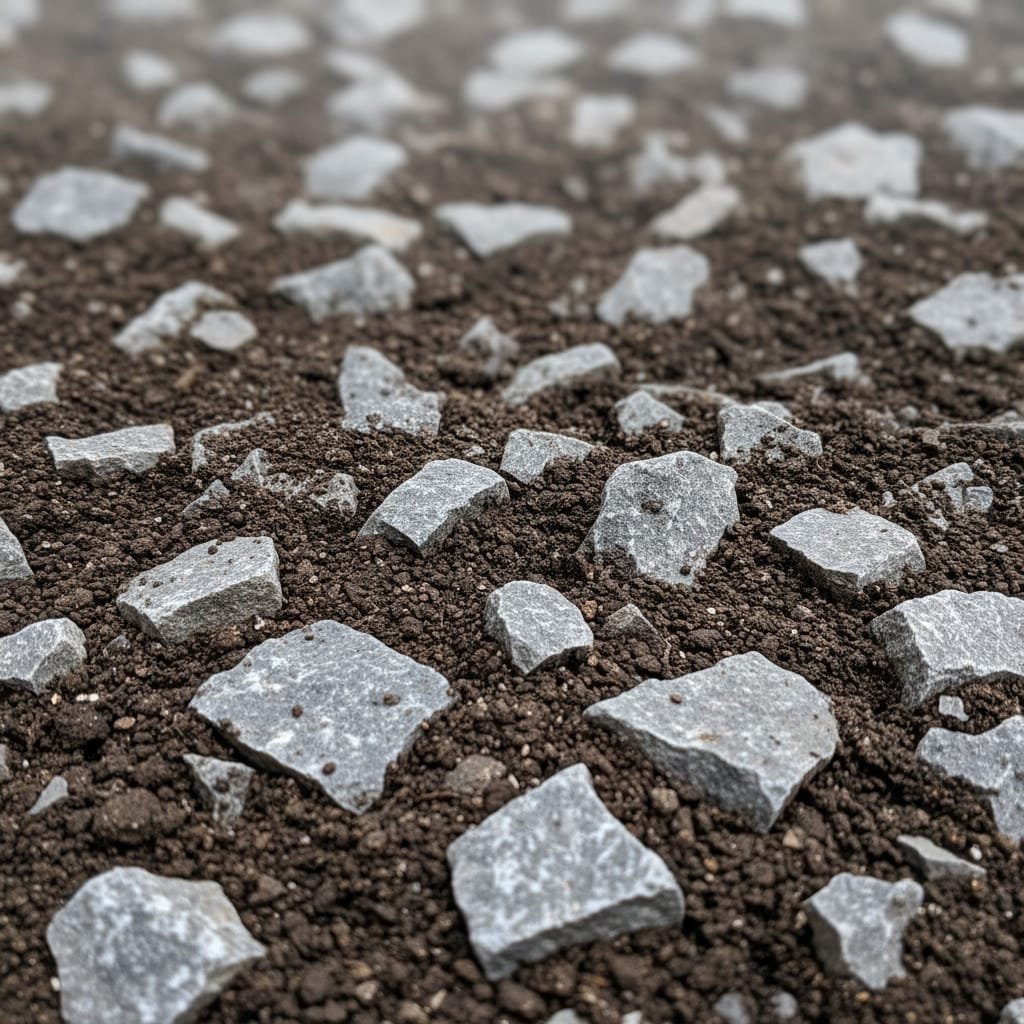
Structural Soil is a specialised engineered growing medium that combines high-quality soil with large 40–60mm ballast rock to create a load-bearing, root-supportive matrix. The large, angular ballast stones form a strong stone skeleton, while the soil occupies the voids around and between the rock, providing space for roots, moisture, and air.
The ballast component is typically crushed rock in natural grey tones (light to dark grey), with sharp, irregular faces that interlock under load. The soil fraction is dark, granular, and slightly compacted, binding around the stones and filling gaps without collapsing the structural framework. This design allows pavements and hard surfaces to be built above while still enabling healthy tree root growth beneath.
Key characteristics:
Usage
Structural Soil is widely used by councils, landscape architects, civil contractors, and developers across urban infrastructure and streetscape projects:
Urban Tree Planting Under Pavements
Car Parks & High-Traffic Hardscapes
Boulevards, Median Strips & Streetscapes
Engineered Root Zones
Application Tips: